Thunderbird, PGP, etc...
I try to keep personal and professional accounts separate on my computer. For example I typically use Safari for work related things and Vivaldi for personal stuff. I know that Safari supports profiles that would accomplish the same thing, but using entirely different browsers makes it easier to keep things straight. Similarly to web browsers, I split up my email by application. I used the macOS mail application for professional email, and accessed my personal email via a web browser (i.e. Vivaldi).
Recently, I decided to try out Thunderbird and bring all my email into one application. It can handle multiple accounts and does it with pretty good separation. Also, I wanted to set up PGP for my email, and Thunderbird seemed like the easiest and best way to do it. Almost no one uses PGP with their email, but that doesn't mean I can't. PGP can send fully encrypted emails, but this only works when the recipient has PGP set up, too. Since most people have not set up PGP, instead I send emails with plain text content and a digital signature file attached. This means that PGP uses my private key to generate a cryptographically signed bit of text that, when combined with my public key, can prove (or disprove) I sent the message. It can also be used to confirm (or deny) that the content of the email wasn't changed between sending and delivery. Almost nothing I send is super important, but the effort involved was small, so why not? I've pasted my personal email public key on my About Me page if you want to use it.
Because Thunderbird is open source and is heavily based on Firefox, you can add extensions to it, just like Firefox. I decided I wanted an extension that adds random quotes to the bottom of my new messages. Some quick searching showed this didn't exist, so I decided to write one. And by "write one," I mean I asked an AI to write one for me. I don't know JavaScript, I don't know how to write Firefox extensions, and I didn't want to learn. The AI did a good enough job and only had one bug that needed fixing (which it fixed after being asked to). I've published the code on github, and it is simple enough to use if you're interested. The plugin has a few built-in quotes, and I have made a library of cycling quotes that will be added to my emails going forward.
Finally, I can endorse Choosy. This is a simple utility that allows you to choose which browser opens up a link. For example, I have it set to send all web links I get in Slack (which I use for work) to Safari. If there is no predefined behavior, it gives you the option to pick which browser to send the link to. It's $10, so it's not free, but if you're like me and want this kind of separation, it's worth it.
SSL-Enabled
With help from my friend, Chris, and the new Let's Encrypt service, this website is now SSL-enabled. Look to the address bar of your browser and you should see a green lock indicating that this website is fully encrypting all data sent to you. I know that this site isn't exactly Amazon or your bank (feel free to send me your credit card information, if you like), but encrypting the whole world wide web is a Good ThingTM.
TSA Regulations

We're flying to Oakland next week for a whole slew of events with family. I haven't decided if I'm going to opt-out of the advanced imaging scanners (AIS) or not. The TSA and FDA claim the X-ray backscatter imaging machines are safe, however they reference studies looking at a different energy-band of X-rays than are used in the machines. The millimeter-wave machines are likely safer. My decision may depend on which type of machine they're using (if Denver has them yet, they didn't the last time I was there) and how much time we have before the flight.
I am a firm believer that most of what the TSA does is "security theater," wherein they do things that appear to make us safer by responding to specific threats, but it does not (and can not ever) address all the different attack vectors terrorists might use. In particular, the AIS machines and the "enhanced" pat-downs (more like "feel-ups"), which have been introduced ostensibly in response to the "underwear bomber" from a year ago, fail to address "internally" stored explosives, so to speak. Not that I'm hoping for it to happen, but as soon as this fairly obvious attack vector is tried, what will the TSA do then?
I have some ideas.
- Have passengers to disrobe into hospital-style gowns with open backs. Then they must perform ten deep squats in view of a TSA agent. They have the option of visiting the bathroom beforehand to prevent "accidents" (or get rid of the evidence). This will have the side-benefit of preventing obese and disabled passengers from flying, allowing the airlines to reduce seat and aisle width and legroom even further.
- Tell passengers to show up to the airport six hours early and give everyone a strong laxative. This may be combined with the above, in order to "facilitate" the discovery or disposal of explosives.
- Sedate passengers prior and during to each flight period, giving them a 24 hour window over which the flight may occur. This prevents the terrorists from being conscious to set a bomb off, or set a timer beforehand. To prevent the use of air pressure-sensitive triggers, the sedated passengers would spend time in a high-altitude chamber.
- Good ol' fashioned cavity searches. Anything for security, right?
Sure, the things above sound ridiculous, but so does wasteful security that responds to specific threats, which is what we have now.
Amusing Spam

This is actually quite a clever spam in that they're not quoting a ridiculous amount of money. But in other respects they've make mistakes. I like how "IWP" seems to stand for some kind of action, like Input With Prejudice, but who can really know? It's also nine days until the end of year. It's very kind of the IRS to already have calculated my entire 2007 tax burden already, all my exemptions, and capital gains/losses, before the end of the year. I especially appreciate the Christmas greeting (see the full size).
[W]hack a Phone
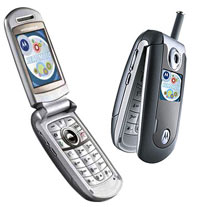
I've had my Motorola E815 phone for about a year. It has bluetooth, a camera, and other cool features, like many modern phones. Bluetooth enables you to transfer photos, movies and ringtones on and off a phone. All these things seem like a useful feature set for a phone. However, Verizon, the carrier for my current phone, disabled a number of bluetooth features, such as file transfer.
Why would Verizon intentionally cripple a phone? Money, of course. Turning off the file transfer abilities of a phone means that if I want to get the photos I take using my phone onto my personal computer, I need to use their not free services. Also, if I want to get a new ringtone, I need to pay for them (often over a buck for 30 seconds of music!), instead of uploading a simple, free, MIDI I found on the internet.
Ever since I got my phone, I've been aware that it is easily hacked to allow all bluetooth function, but it required a special USB cable. I never got around to buying the $10 cable, and hacking the phone, until now.

The camera actually takes farily decent photos in a wide range of light conditions considering it's just a pinhole lens. It also takes short movies, with sound. I can also upload MIDI sound files, or even MP3s, and make them my ringtone. I've always wanted to pull out my camera phone whenever I saw something cool, but never bothered because I couldn't get them off the camera for free. Now that I can, I'll be more willing to snap a pic of whatever.

Security for Dummies
Today a bunch of "Islamic fascists" were arrested in London for plotting to blow up 10 transatlantic flights using liquid bombs. My parents are currently in Wales, and I think they were planning on returning in a little over a week. Who knows if their flight might have been targeted? It's unlikely, but there was (and still is, I suppose) a non-zero probability of something happening to any flight.
After watching the evening news tonight on several networks, I've come up with some comments on airport security guidelines & related topics:
- On both networks I watched (CBS, NBC) there were dozens of clips of passengers throwing their liquid items into the trash, and then airport workers collecting huge bags full of discarded items & throwing them into dumpsters. If liqud bombs were a real concern, wouldn't the contents of the trash be treated with more respect than that?
- I subscribe to the Crypto-Gram newsletter written by Bruce Schneier. One of the things he's written about over the last few years is airport security. Specifically, how they (being the "experts" at DHS/TSA) react to security threats. Usually, they act after the threat has been identified, or sometimes, after the second time. Responding after the threat is identified is like taking a final exam a second time, except people die. What's needed is more comprehensive security that responds to a broad range of threats, not silly movie plot scenarios.
- I can't resist. Here's my movie plot scenario: If a terrorist is willing to die, surely they're willing to undergo some elective surgery. I don't think it would be impossible to implant some explosive device inside a human body. It would not be very comfortable, and would probably lead to infections after a while, but the bomber needs only to be able to tolerate it long enough to get on the airplane. Right now (and until someone attempts this) people are only put through the metal detector. Careful engineering could certainly prevent any kind of detection by that crude device.
- Airline perks are going to make a comeback. Now that you can't take anything onto the airplane, the airline will have to supply diversions and food, or else they face very bored & unhappy passengers. The alternative is to start filling the cabin with N2O.
- A coworker today theorized that the endgame in all of this is a plane full of passengers in hospital-like paper gowns handcuffed to the seats. Passengers will be supplied with absorbent underwear for the longer flights. Children will be put in cages. Do you think this can't happen?
Die Spam, Die!
The blogging software I use for this site, WordPress, has the ability to add features through plugins. I just added a new plugin, called Akismet that is supposed to keep comment spam from appearing on my website. When I first set this blogging software up, I got a couple spam comments right away (get your viagra here! horny college co-eds!). I didn't feel like fighting it so I turned off comments for all my posts. Hopefully this weirdly spelled Akismet will actually work!
Okay, spammers, give it your best shot!
Cantenna
Today I installed a cantenna on the roof of my apartment building. A "cantenna" is a highly directional, high-gain microwave antenna made out of a can, like a soup can. The most common application is for long distance wireless internet links (802.11x). I made my cantenna out of an old Maxwell House coffee can.
The cantenna points towards the UCSD Cancer Center, which is roughly 325 meters away from my apartment. This is outside the usual range for wireless internet. My apartment faces Southeast, while the center is Northwest of my building, meaning I cannot see the building at all from inside my apartment.

After getting permission from the apartment maintainence supervisor, I put a 16" long peice of 3/4" square pipe on the facia of the building. On top of that I screwed on an old flag mount, one you would attach to the side of your house on independence day. The flag mount has a part that has one pi steradian movement, allowing me to have a good measure of freedom to aim the cantenna. The cantenna is wired to a Linksys WET11 which lives in a plastic box under the cover of my porch ceiling. From there an ethernet wire goes inside through a small hole in the screen door frame.

It was amazing how easy it was to get a strong connection! I had already done some simple tests, holding the cantenna up on the end of a broom. But nothing was guaranteed until I actually installed the thing. All I have to do is make sure the trees stay pruned back!
While it isn't the fastest connection ever (~300 kb/s max) it is very cheap (free-99). I estimate I've put about $100 into materials. My own DSL/Cable connection would cost that much every two or three months. It's especially fast to campus computers, where I send most of my data back and forth.